Showing posts with label Indian movies. Show all posts

Friday, May 11, 2012

Why its unlikely to have Indian movies without songs... Ever?


Songs were inherited from musical dramas, fair enough. But now, after 99 years why are they still integral part of Indian movies? Most of the urban customers also watch English movies and also appreciate them. Then why their taste is so different between Indian movies and English movies. The question is would we ever see commercially successful Indian movies?


My answer is NO.


Firstly, songs which started off as an add-on to the story, have now become integral part of the movies. The story warps around the music, story moves ahead thru songs. Hit songs is one of the essential ingredients of a hit film. There are some actors like Shah Rukh Khan , who owe their success to hit songs.


Secondly, songs don't just stay on silver screen. They are omnipresent. Music channels live and breathe because of them. They make traffic jams bearable, long drives enjoyable. Boring ring tones have given way to personalised songs for the callers. Pubs and discos dance to their tunes. School entertainment programs or family functions are incomplete without them.


Lastly, songs are an integral part of the revenue streams of Indian movies. They generate about 10-12% revenues for the movies. The song rights are sold even before movie is produced. They are the teasers for upcoming movies. ...and what can they do to upcoming movies... Well ask Dhanush who viral-ed the Kolavari. This song recording video of upcoming movie went viral and millions of netizens saw it minutes after release. Movie is yet to be released but the singer and actor Dhanush is not only a celebrity but also considered the most successful viral marketer. He addressed IIM students about key success factors of successful viral marketing... All before release of the movie.


How could you have Indian movies without such a great business proposition? Or form of entertainment that creates super-stars? Or plays an integral role of people's lives?


(This rounds up the movie-series. Coming up next Food-series. Why are so many Indians Vegetarians? Why they don't eat beef? etc)


Read extended short story version of Why Do Indians blogs with a few more interesting indian inscrutable ways in Why Do Indians..? - The Book


Tuesday, May 1, 2012

Why lead actresses are always beautiful and lead actor's looks don't matter?

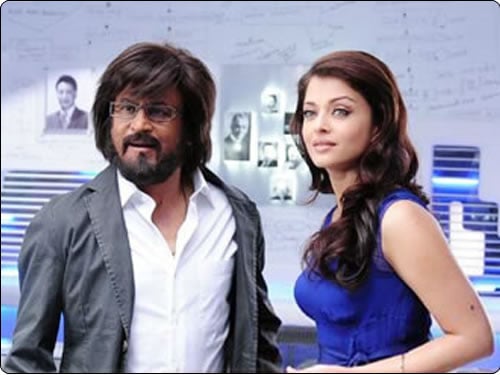
[caption id="" align="alignnone" width="500"] Rajnikanth with Aishwarya...[/caption]

This is another peculiar thing about Indian movies. You could have a movie where lead actor (hero) may have average looks but lead actress (heroin) would always look beautiful. The top actress is dream girl for the nation. Starting from Hema Malini to Madhuri Dixit to Aishwarya to Kareena the top actresses have to look beautiful. The same rule does not seem to apply to heroes. Rajnikanth is not just a hero but a phenomenon. He started as a bus conductor in public bus, got noticed by a movie director, rest his history. He broke all records when he romanced Aishwarya Rai-Bachchan aged 30+ when he himself was aged about 60. His looks were never his strengths, still he is one of the most successful actors. Current leading heroes - the 3 Khans- Shahrukh, Salman and Amir - look great but Hrithik, John look better. But 3 khans rule the industry. Whenever the glamour quotient falls below a threshold, the director summons the most explosive beauty for an item song. The actresses summoned to do this suggestive, explosive, sexy songs feels flattered and assured about her beauty-credentials.

Why are Indian movies so obsessed with beautiful girls on screen?

The answer became very clear after I read "Why men need sex and Women want love". This book differentiates male brain from female brains. Male brain is wired to be activated by visual signals. Men are visual animals and looking at beautiful looking girls is controlled by hypothalamus - the primitive part of brain controlled by genes.

The commercial success of movie depends on ticket sales which contributes to about 80% of revenue. Bulk of this revenue is contributed by a mythical animal called "the average Indian". He exists everywhere but it is difficult to pin-point him, it is difficult to typecast him. Every Indian is different in his own own ways but this average Indian lives in every Indian. He leads a life which is far from perfect. There are struggles, frustrations, unfulfilled dreams.

Movies are a perfect getaway . He really gets involved in movies. It is not just an entertainment but part of his life where he can accomplish . He subconsciously relates to the protagonist. In those 3 hours he is transformed to the onscreen hero. So the hero has to look as close to him as possible. The average Indian knows he is not too handsome. Heroes with killer looks makes the transformation difficult. Once transformed, the Hero has to get the most beautiful looking girl. This average Indian subconsciously romances the most beautiful girl, dances with them, sings for them. Heroin has to look beautiful, average looking heroin is not OK. The average Indian already has a average looking girl. In movie he wants the best looking girl.

What about female audience? Why don't they demand the most handsome hero? Why do they settle for next-door looks? The same book provided an answer. Women have to feel, they don't select their partners based on looks but based on mental connection. Thats where heroes in Indian movies score well. Irrespective of the looks Hero in Indian movies always connects with the heroin. He is the nicest person around and connects well with all female characters. Even if he is playing criminal, he always wins sympathy of the audience, predominantly female audience. His looks therefore don't matter, mental connection does.

Movies for average men and women in India are not just entertainment. It is a mental process, a paid illusion, 3 hours where they can accomplish things which are not possible in real life.
Read extended short story version of Why Do Indians blogs with a few more interesting indian inscrutable ways in Why Do Indians..? – The Book

Wednesday, April 25, 2012

Why do Indian movies always have songs?


[caption id="" align="alignnone" width="450"]Two most beautiful women in one screen Indian Beauty Unlimited![/caption]

She had tears in her eyes. He had a lost look on his face. They were sitting in a public garden. He reached out to her and held her hand it close to his heart. Shivers ran down her body. "I love you", he said. She wiped her tears, started smiling. 


Background music started. So far all the inconsequential characters in the public garden fell into a formation. Drums started to roll down the slope.  Hero started dancing and they all mimicked. She hid behind the trees and he started to sing, dance and run behind her... All at the same time. 


The whole crowd in the theatre started cheering the hit number. My American colleague who wanted to get a guided tour to Indian movies, looked aghast. He had a big question mark on his face as he looked at me. I reached out for my next popcorn.


The world is always puzzled about such songs being integral part of Indian movies. Don't they make the whole movie unrealistic? Globally, film makers go out of their way to make the movie look as close to reality as possible. They shoot at locations, record background noises at locations etc. They are amazed at how Indians can be so comfortable with songs which are so blatantly unreal? And why does the audience in the theatres cheer or clap at onscreen actors in theatres? Do they expect the on screen actors to hear it?


Indian movies have their root in "Sangeet Natya" which is a Sanskrit word for musical dramas. (http://vivekvaidya.com/index.php/2012/03/why-do-indians-their-movies/)  This was the most popular entertainment format prevalent in India. All major characters in this art form had to be singers. They would communicate partly in dialogues and would suddenly break into songs. As the name suggests, songs was the main attractions for these dramas. The audience would know the hit numbers but they would watch the drama again and again to hear it from their favourite singers. They would cheer, clap and hum the song with the characters. If they liked the song, they would request the on-stage character to sing it again. The actor would take it as his honour and oblige. Indian movies, when they arrived in 1913, we're looking to compete with a highly active and interactive form of entertainment.


Dadasaheb Phalake, father of Indian movies, had no choice but to make Indian movies look very similar to Sangeet Natya. He could get actors very easily, the format was set. All he had to do was film it and show it on the screen. In fact, while introducing movies to people he called them - drama on screen. This is where Indian movies inherited songs. The storyline and songs are intertwined and not really seen as two separate things by Indian audience for last 99 years. The tradition of cheering on screen performance is also deep rooted. That's how it used to happen in those days. If the actors performed on stage and the audience did not clap or cheer, that would be a nightmare for the actors. Those were signs of a bad act. Audience had the responsibility to proactively communicate their acceptance, which they continue to follow even for Indian movies.


Indian movie has evolved in last 99 years. Several movie-makers have tried to experiment with songs. Some of them produced song-less movies, some others produced musical stories. Movies with songs always outperformed movies without songs. Legacy continues... In my next blog, I will talk about Why would songs remain an integral part of Indian movies in foreseeble future.


Bal Gandharva - biographical movie about Marathi singing legend - this clip shows on stage singing skills, coupled with interactivity with the audience. The situation depicted in the clip is extremely tragic. Bal Gandharva - protagonist, male dressed as female has lost his daughter. But he is unable to cancel the show, has to perform on stage and the audience does not seem to let him go...


Read extended short story version of Why Do Indians blogs with a few more interesting indian inscrutable ways in Why Do Indians..? – The Book

Friday, March 23, 2012

Why are Indian movies 3 hours long?

One of the famous saying in India goes - recession times or inflation times, three things would never lose their sheen in India - movies, cricket and marriages. I would try to cover all of these and more in this blog series, starting with movies.
Indian movies is a phenomenon considered bizarre by rest of the world. Movies are too long - 3 hours as against rest of the world which produces 1.5 hour movies. Most of these movies are unreal, extremely predictable and almost formula driven. Songs - which underline the disconnection from reality- are most difficult to swallow for them. The actors and actresses wear flashy make-ups, flashy clothes, give most unreal expression and virtually every situation is melodramatic. Why on earth do Indians love such movies, the world wonders.


Getting the facts right - India is the largest movie producer in the world. About 1,000 movies are produced in India every year across various languages and regions. The second largest movie producer is hollywood - USA which produces 500 movies. Although, currently, hollywood is the market leader in terms of revenues from movies, but things are set to change according to PWC. PWC's report on Titled "See the future" outlines Hollywood which is the global center for filmed entertainment today will steadily lose its influence mainly to Mumbai and Shanghai. Although, Hollywood would still be number 1 in 2040 in terms of market size, the gap between Hollywood and Indian movies would be much narrower. (source: www.pwc.com)


The question is why do Indians love such movies so much?


Cinema arrived in India in in 1913 when Dadasaheb Phalke produced a silent movie called Raja Harishchandra based on the sanskrit epic. The format of the movie was guided by the entertainment options that cinema replaced. The main competition for movies back the was musical dramas. This was a very unique entertainment option that ruled the sub-continent. The drama would be usually based on mythological story and characters. Songs were integral part of the story. These were based on classical ragas. The actors would not only act but also sing during the play. What is most astonishing is, these dramas would be extremely interactive, open ended performance . If the audience liked a song, they would request the on-stage actor to sing it again. And again and again. The actors would take pride in how many "once more" requests they got during any performance. A good play which would be scripted for 3 hours would take anywhere between 4 to 6 hours to end. In fact actors would consider it a disgrace if the drama ended exactly 3 hours without any "once more" request.


Indian cinema was competing against such advanced, interactive form of entertainment. Naturally, some basic things such as songs could not be altered. Such as duration of 3 hours, which could not change at all.


But Why 3 hours? Isn't it too long. Considering the history and predecessor of Indian cinema, 3 hours is not too long at all. Dramas used to go on for much longer duration. In those days a significant chunk of the audience used to travel from nearby towns and villages. So the entertainment duration had to be longer than their journey time. Anything shorter and the option would no longer be attractive. Even these days, cinema is screened in multiplexes, the best value for money that is spent in reaching the cinema halls and buying tickets is in cinema that lasts 3 hours. Simple.  Various experiments of altering movie durations have met with limited success. What is even more surprising is longer movies (yeah, longer than 3 hours) have done better business than smaller movies. Hence, about 3 hour seems to be commercially optimal duration. Bizzare but this is the way Indians like their movies.


In my next blog, I would talk about "Why would songs be always an integral part of Indian Cinema?"


Read extended short story version of Why Do Indians blogs with a few more interesting indian inscrutable ways in Why Do Indians..? – The Book